The Old Gods
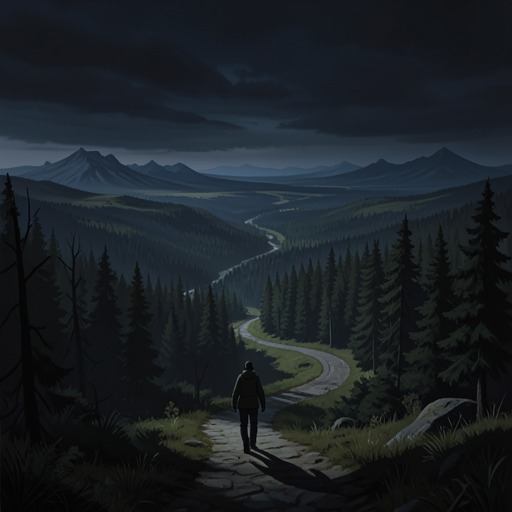
A Clash of KingsThe Old Gods are the ancient powers associated with the First Men and the forests, a faith expressed less through doctrine than through trees, bloodline, dreams, memory, and an intimate attention to the natural world. Their decisive significance lies in the way they preserve a form of knowledge that the characters cannot fully explain: the wolves may understand what human teachers have forgotten, and the heart trees may become a medium through which the past, the gods, and Bran Stark’s developing abilities seem to answer one another.
Nature and Ancestral Tradition
The Old Gods are presented as an inherited tradition of the Starks and the First Men rather than as a faith governed by a visible hierarchy. Bran Stark remembers Old Nan saying that the Starks possess “wolf blood,” though its strength varies among individuals. His recurring sense that the direwolves are speaking brother to brother places the faith within a web of kinship joining human beings, animals, ancestors, and the land. The gods are therefore encountered through continuities of blood and place rather than through formal teaching alone.
The tradition also survives as a political inheritance. Robb Stark’s crown is deliberately fashioned in the image of the lost crown of the Kings of Winter, with bronze, iron, First Men runes, and nine black iron spikes shaped like swords. The crown’s materials reject the brightness of gold, silver, and gemstones in favor of the dark strength associated with winter. When Robb claims that the north and the Riverlands are a free and independent kingdom, his declaration draws authority from the old Stark kings and from a remembered northern identity. The banner that continues to represent the King in the North is likewise the grey direwolf of House Stark running across an ice-white field, making ancestral memory visible as a political emblem.
Weirwoods, Heart Trees, and Sacred Speech
The heart tree is the central visible point of contact with the Old Gods. Jon Snow repeats Lord Eddard Stark’s belief that no man can lie before a heart tree because the Old Gods know when men are lying. The tree is consequently not only a religious symbol but also an imagined witness and judge, one that stands outside human courts and political claims. Its authority depends on presence: a person speaks before living wood and is exposed to a truth that human observers may miss.
Bran’s experience intensifies this relationship. After Osha warns him that he should not struggle so fiercely because she has seen him speaking to the heart tree and believes the gods may be speaking back, Bran enters the godswood in a dream. There he moves beneath green-grey sentinels and ancient, gnarled oaks, exulting in the temporary recovery of walking. The dream transforms the godswood from a familiar castle enclosure into a sacred threshold where bodily limitation can be suspended, even if only within sleep.
In a later vision, a slender weirwood appears to grow from solid rock before Bran’s eyes. Its pale roots twist through cracks, its trunk thickens, and its red-eyed face bears the features of his brother. The tree asks, through a silent shout, whether Bran’s brother has always had three eyes, then answers that this was not so before the crow. The vision joins the Old Gods to Bran’s supernatural calling, while its knowledge of death and its unsettling mixture of tree, boy, and wolf prevent the sacred from appearing wholly comforting. The heart tree offers contact, but not clarity or safety.
Wolves and Alternative Knowledge
The direwolves repeatedly function as living interpreters of mysteries that human characters cannot settle. Summer and Shaggydog howl at the red comet, while Bran dreams that he nearly understands their song, as though it were a language once known and forgotten. The wolves’ voices recall a larger pack that once contained six animals, and Bran wonders whether they are calling to Grey Wind, Ghost, Nymeria, and Lady’s Shade. The Old Gods therefore appear through absence as much as presence: the surviving wolves mourn a divided family and perhaps a divided world.
Their howling is linked to moments of death and catastrophe. Summer howled when Bran fell, and Shaggydog and Grey Wind joined him; later, the wolves howled when the raven brought word of Lord Eddard Stark’s death. Bran cannot determine whether they are mourning Robb Stark, Jon Snow, his mother, or one of his sisters, but the uncertainty itself gives the animals a form of perception beyond ordinary human knowledge. When Bran imitates them beneath the comet, his thin, awkward cry is answered by Summer’s deeper voice and then joined by Shaggydog’s, creating a brief communion among the last members of their pack.
Other characters offer competing interpretations of the same signs. Maester Luwin believes the wolves howl at the comet because they mistake it for the moon. Osha, a wildling woman, counters that the wolves possess more wit than the maester and know truths he has forgotten. Septon Chayle interprets the comet as “the sword that slays the season,” while Old Nan insists that it means dragons, claiming she can smell them despite being nearly blind. These explanations do not resolve the sign; they establish a contest between learned religion, maesterly reason, ancient memory, wildling instinct, and animal perception. The Old Gods occupy the space where those systems overlap without becoming identical.
Conflict with Other Powers
The Old Gods stand in implicit contrast to newer religions and to political authority. Lady Selyse Baratheon interprets the red comet through the faith of R’hllor, calling it the fiery god’s banner and urging Stannis Baratheon to embrace the power of the Lord of Light. Her reading turns the sky into a direct mandate for conquest. Stannis answers by asking how many swords the Lord of Light will place in his hand, exposing the practical and political demand beneath the religious claim. The Old Gods, by contrast, are not shown promising armies or guaranteeing victory; their signs remain intimate, ambiguous, and rooted in trees, wolves, and inherited memory.
The Old Way of the ironborn presents another contrast. Aegon the Dragon destroyed that older order by burning Black Harren and returning Harren’s kingdom to the rivermen, reducing the Iron Islands within the larger realm he forged. Theon Greyjoy remembers that the old red tales still circulate around driftwood fires, while his father’s words proclaim, “We Do Not Sow.” This evidence does not identify the Old Gods with the ironborn tradition, but it places both within a wider struggle over what older customs mean after conquest and political centralization. An ancient inheritance may preserve identity, yet it may also be invoked to justify restoration, rebellion, or violence.
Cultural and Narrative Significance
The Old Gods provide a language for identities that resist absorption into the Iron Throne’s realm. Robb Stark’s crown, the northern banner, the remembered Kings of Winter, and the claim to independence all convert ancestral symbols into political legitimacy. The past is not inert: it supplies the imagery through which a community recognizes itself and through which rebellion can be presented as recovery rather than innovation.
At the same time, the faith complicates any simple division between superstition and truth. The wolves’ apparent foreknowledge, Bran’s dreams, the heart tree’s role as witness, and the weirwood vision all suggest that the old religion may possess genuine access to realities that the characters only partly perceive. Yet the evidence preserves uncertainty. No single authority explains the gods, and no interpretation of the comet commands universal assent. The Old Gods are consequently a structure of relation rather than a settled creed: they bind people to forests, ancestors, animals, and contested memories while leaving the meaning of those bonds dangerously open.
Their deepest narrative function is to mediate between nature and culture, death and continuity, private vision and public history. Bran’s wolf dreams turn disability into a passage toward another mode of movement; the heart tree turns speech into an encounter with judgment; the direwolves turn grief into a shared animal song; and Stark symbols turn ancestral memory into a claim over territory. The Old Gods do not remove the violence of history, but they give that history an older depth, making the struggle for kingdoms also a struggle over which past, which bloodline, and which form of knowledge will survive.